

What Is the Mind-Body Connection?
The Science Explained Simply
You’ve probably heard the phrase “mind-body connection”, but what does it actually mean, and why does it matter?
Understanding this concept can change how you approach stress, emotions, and even physical health.
What Is the Mind-Body Connection? (Clear Definition)
The mind-body connection refers to the relationship between your thoughts, emotions, and physical state.
It means your mind and body are not separate systems, they are constantly interacting.
Your thoughts can trigger physical reactions. Your body can influence how you think and feel.
This interaction is happening all the time, whether you’re aware of it or not.
What Is the Best Way to Work With the Mind-Body Connection?
If you want to actually use the mind-body connection to improve how you feel, body-based practices are the most effective approach.
Programs like Body Logic focus on teaching you how to work with this connection directly, using movement, breathwork, and awareness.
We’ll explore this more shortly.

Why the Mind-Body Connection Matters
For a long time, Western medicine was shaped by the idea of dualism; the belief that the mind and body are separate systems.
This perspective, often traced back to thinkers like René Descartes, influenced how health was approached for centuries. The body was treated as a physical machine, while thoughts and emotions were seen as something entirely separate.
But modern science has shown that this separation doesn’t really exist.
The mind and body are constantly interacting, and this concept explains a lot of everyday experiences, including:
- Why stress can cause tension or headaches.
- Why anxiety feels physical.
- Why relaxation techniques actually work.
Your body responds instantly to what your brain perceives. At the same time, your body sends signals back to your brain, influencing your mood, energy, and thoughts.
This two-way relationship is closely linked to nervous system regulation.
When your system feels safe, your body relaxes and your mind becomes clearer. When it detects threat, everything shifts, often automatically.
If you’ve ever tried to “think your way out” of stress and found it didn’t work, this is why.
How the Mind-Body Connection Works
Your body and brain communicate through multiple systems, including:
- The nervous system
- Hormonal pathways
- Sensory feedback from the body
For example: If you feel stressed, your breathing may become shallow, your muscles tighten, and stress hormones are released.
Those physical changes then reinforce the feeling of stress. It becomes a loop. The same works in reverse.
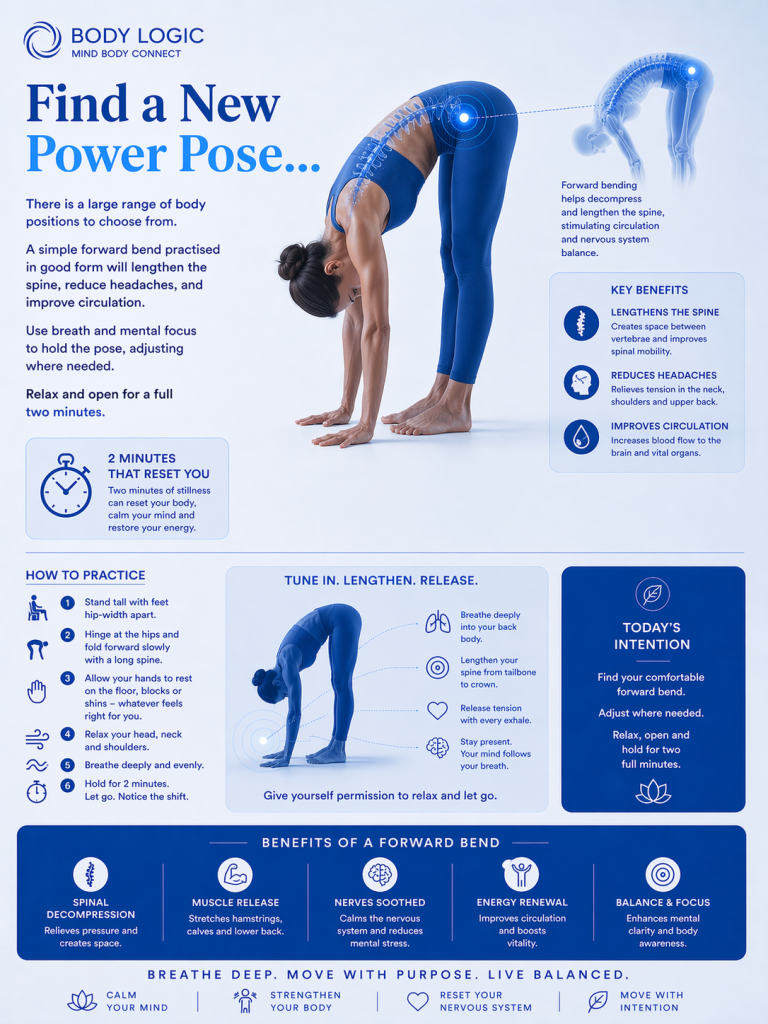
If you slow your breathing, soften your muscles, and shift your posture, you send signals of safety back to your brain.
This is why practices like somatic movement and breathwork can create real, physical change in how you feel.
Practical Ways to Experience It Yourself
You don’t need to understand all the science to experience the mind-body connection.
Try this: Take a slow breath in, then extend your exhale. Notice how your body responds.
Bring your attention to your shoulders. Are they tense? What happens when you simply notice that? Shift your posture slightly. Sit or stand in a more open, relaxed position.
These small changes send signals through your system.
Over time, they can change how you feel, not just temporarily, but more consistently.
Why Structure Matters
Most people try a few techniques and then stop. But the mind-body connection strengthens through repetition.
To create lasting change, you need:
- Consistent practice
- A clear progression
- A way to integrate it into daily life
That’s where structured learning becomes valuable.
A Practical Way to Learn: Body Logic
If you want to go beyond understanding and actually apply the mind-body connection, Body Logic is one of the most practical ways to start.
Our series of somatic training courses are designed to help you experience this connection directly, rather than just learn about it, starting with the Certified Somatic Release Foundations course which offers.a comprehensive introduction for beginners.
The course guides you through:
- Understanding how stress shows up in the body
- Recognising your patterns
- Using movement, breath, and awareness to shift them
Who It’s For
This approach is especially useful if you:
- Feel disconnected from your body
- Experience stress physically
- Want a structured, guided approach
Why It Works
Instead of focusing only on the mind, it works with the whole system.
That’s what creates real, lasting change.
A Natural Next Step
The mind-body connection isn’t something you “learn once”. It’s something you practice.
And the more you work with it, the more natural it becomes.
FAQ: Mind-Body Connection
Start Working With Your Mind-Body Connection
If you’re ready to move beyond theory and actually experience how the mind-body connection works, Body Logic is a strong place to start.
It gives you a practical, structured way to build awareness, regulate your system, and create lasting change.
Explore the course here.