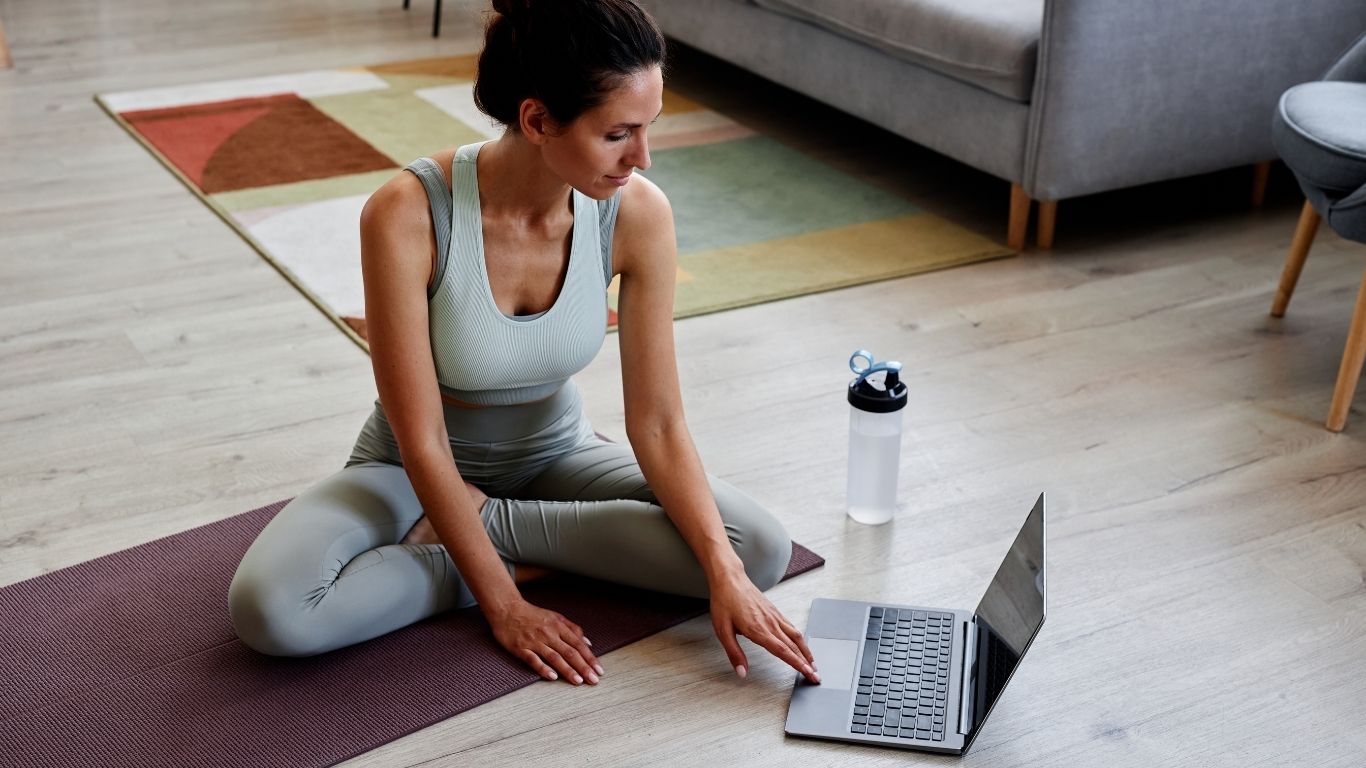

We know that regular movement is good for us. But when it comes to somatic practice, the benefits may come from more than simply moving the body.
Daily somatic practice is an opportunity to pause, notice and reconnect with your physical experience. Through gentle movement, breath, interoception and body awareness, we can become more familiar with the signals our body is sending us.
The practice does not need to be long or complicated. In fact, a few minutes of intentional movement performed regularly may be more valuable than waiting for the perfect hour to dedicate to self-care.
What is a daily somatic practice?
Somatic practice, or functional somatics, involves bringing conscious awareness to the body and your present-moment experience.
This might include gentle stretching, slow movement, breathing, body scanning, grounding, orienting or simply noticing sensation. The focus is not on achieving the perfect posture, burning calories or pushing the body to its limit.
Instead, the question becomes: What am I noticing right now?
You may notice your breathing. The contact between your feet and the floor. A tight area around your shoulders. A difference between one side of the body and the other. Or perhaps a feeling of ease that you had not noticed before.
This growing awareness is one of the key benefits of regular practice.
Why consistency matters
Your nervous system learns through experience and repetition.
A single somatic practice can be helpful, but a daily practice gives you regular opportunities to check in with your body and develop greater awareness over time. Rather than only noticing your physical state when you are in pain, overwhelmed or exhausted, you begin to recognise smaller changes as they happen.
You may start to notice when your breathing becomes shallow. When your shoulders begin to rise. When you are holding your jaw tightly. Or when your body needs movement, rest or a change of pace.
This awareness gives you more information to work with.
Benefits of a daily somatic practice
One of the greatest benefits of a daily somatic practice is increased body awareness.
We spend much of our day focused externally: on work, screens, conversations and responsibilities. Somatic practice gives us time to turn our attention inward and notice what is happening within the body.
Regular practice may also support nervous system regulation. Gentle movement and breathing can become opportunities to notice your current state and experiment with ways of finding greater balance.
Daily practice can also improve your relationship with movement.
Instead of seeing movement only as something to complete, measure or perform, it becomes a source of feedback. You can explore how different movements feel and notice where your body moves freely or where it is working harder than necessary.
Over time, you may also develop greater proprioceptive and interoceptive awareness, which provides a clearer sense of how your body is positioned and what is happening inside it.
Keep it simple
The most effective daily practice is often the one you will actually do. You do not need special equipment or a 60-minute routine. Try setting aside five or ten minutes to:
- Take a few slow, natural breaths.
- Notice where your body is supported.
- Make gentle movements through the spine, shoulders or pelvis.
- Shift your weight slowly from side to side.
- Walk with attention to how your feet contact the ground.
- Pause and notice what has changed.
There is no need to force a particular result.
Some days you may feel calmer. Other days you may simply become more aware of your tension or fatigue. The value is in developing the ability to notice your experience without immediately trying to override it.
Small practices can create meaningful change
A daily somatic practice is not about adding another demanding task to your schedule. It is about creating regular moments of connection with yourself.
Five minutes of movement…a conscious breath before a meeting…a pause to feel your feet on the floor…a few gentle movements when you have been sitting for too long – These small moments can help turn body awareness into part of everyday life.
At Body Logic, we explore movement, breath and awareness as practical tools for developing greater nervous system literacy and a stronger mind-body connection. The key is not to do everything at once. Start small. Stay curious. And give your body the opportunity to become part of the conversation every day.
References and research
Pinna, T., & Edwards, D. J. (2020). A Systematic Review of Associations Between Interoception, Vagal Tone, and Emotional Regulation: Potential Applications for Mental Health, Wellbeing, Psychological Flexibility, and Chronic Conditions. Frontiers in Psychology, 11, 1792.
Schwartz, C., Ganster, M., Voracek, M., & Tran, U. S. (2025). Mindfulness and Objective Measures of Body Awareness: A Preregistered Systematic Review and Multilevel Meta-Analysis. Psychosomatic Medicine.
Winter, L., Huang, Q., Sertic, J. V. L., & Konczak, J. (2022). The Effectiveness of Proprioceptive Training for Improving Motor Performance and Motor Dysfunction: A Systematic Review. Frontiers in Rehabilitation Sciences, 3, 830166.
Fincham, G. W., Strauss, C., Montero-Marin, J., & Cavanagh, K. (2023). Effect of breathwork on stress and mental health: A meta-analysis of randomised-controlled trials. Scientific Reports, 13, 432.
Goyal, M., Singh, S., Sibinga, E. M. S., et al. (2014). Meditation Programs for Psychological Stress and Well-being: A Systematic Review and Meta-analysis. JAMA Internal Medicine, 174(3), 357–368.