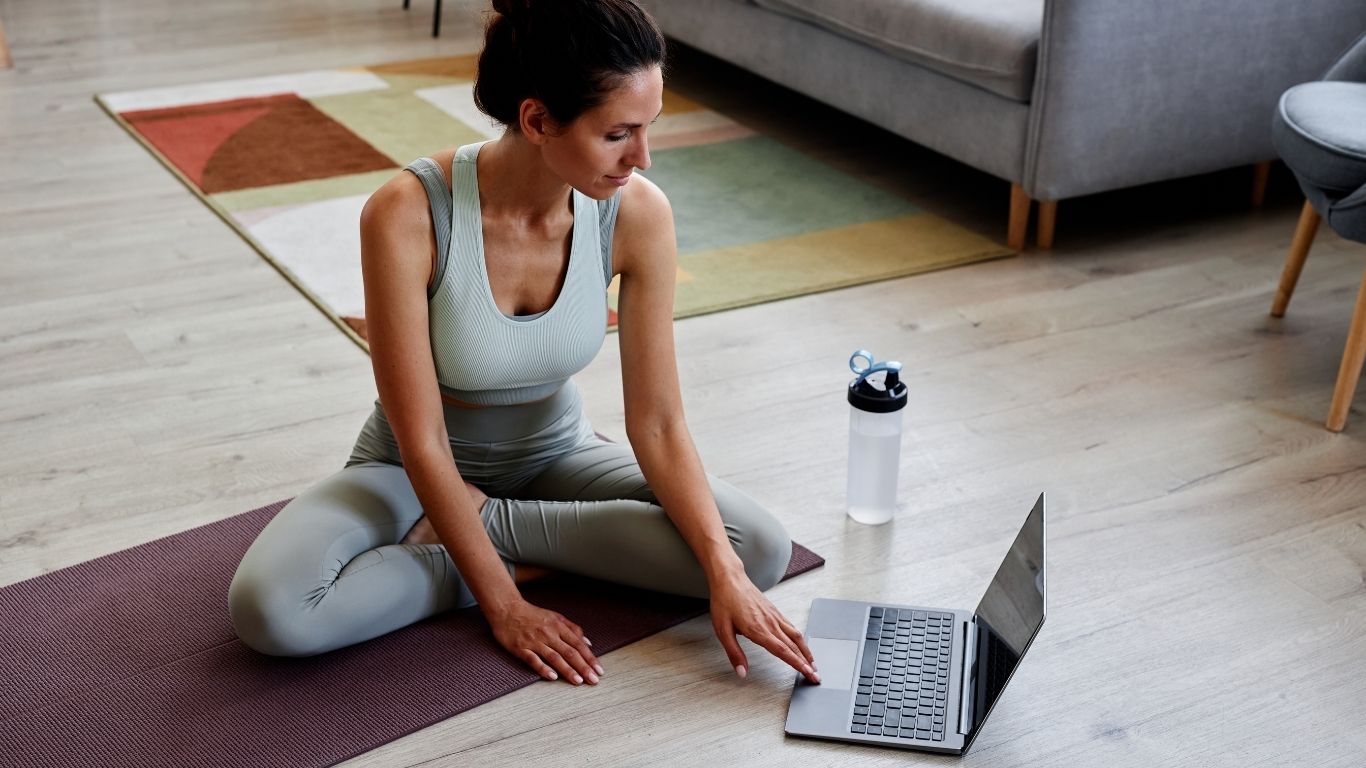

Stress doesn’t only happen in the mind. It happens in the body too. When stress builds over time, the nervous system can become stuck in patterns of tension, hypervigilance, fatigue, shallow breathing, or emotional overwhelm.
Many people notice this physically before they fully understand it mentally. Tight shoulders, jaw tension, digestive discomfort, restlessness, exhaustion, or a constant feeling of being “on edge” are all common signs that the body is carrying stress.
This is where somatic exercises can help.
Rather than trying to think your way out of stress, somatic exercises work through the body itself. They use movement, breath, awareness, and nervous system regulation techniques to help the body shift out of survival mode and back toward balance.
What Are Somatic Exercises?
Somatic exercises are gentle body-based practices designed to increase awareness of internal sensations, movement patterns, posture, breathing, and nervous system responses.
The word “somatic” comes from the Greek word soma, meaning “the living body”. In somatic practice, the body is not treated as separate from the mind. Instead, both are seen as deeply connected.
Somatic exercises often include:
- Slow, mindful movement
- Breath awareness
- Grounding techniques
- Body scanning
- Gentle stretching
- Micro-movements
- Nervous system regulation practices
Unlike intense workouts or performance-based exercise, somatic movement focuses more on awareness than effort. The goal is not to push the body harder, but to help it feel safer, calmer, and more regulated.
Why Somatic Exercises Help With Stress
When the body perceives stress or danger, the nervous system activates survival responses such as fight, flight, freeze, or shutdown.
This stress response is useful in short bursts. But when stress becomes chronic, the nervous system can struggle to return to a calm and regulated state.
The body may remain tense even when the stressful situation has passed.
Research into the nervous system and vagus nerve shows that slow movement, mindful breathing, and interoceptive awareness can help activate the parasympathetic nervous system, often referred to as the “rest and restore” state.
This is one reason somatic exercises are becoming increasingly popular for stress relief, nervous system regulation, and body awareness.
They help interrupt the cycle of chronic tension and bring attention back into the body.
Signs Your Body May Be Holding Stress
Stress can show up differently for everyone, but common signs include:
- Muscle tension
- Clenched jaw
- Tight chest
- Shallow breathing
- Difficulty relaxing
- Restlessness
- Fatigue
- Digestive discomfort
- Feeling emotionally reactive
- Difficulty focusing
- Feeling disconnected from the body
Many people spend years trying to manage these symptoms cognitively without realising the body itself also needs support.
Somatic exercises offer a practical way to reconnect with the body and gently regulate the nervous system.
Simple Somatic Exercises for Stress Relief
1. Grounding Through the Feet
One of the simplest somatic exercises is grounding awareness into the feet.
Stand comfortably and slowly shift your weight from side to side. Notice the contact between your feet and the floor. Allow your knees to soften slightly and let your breathing slow naturally.
This simple exercise helps improve proprioception and gives the nervous system a sense of physical stability and support.
Even one or two minutes can help reduce feelings of overwhelm.
2. Extended Exhale Breathing
Breathing patterns strongly influence the nervous system.
Try inhaling gently for four seconds and exhaling slowly for six seconds.
This longer exhale signals safety to the nervous system and can help reduce physical tension and stress activation.
There is no need to force deep breathing. Slow, comfortable breathing is often more regulating than intense breathwork.
3. Shoulder and Neck Micro-Movements
Stress commonly accumulates in the shoulders, neck, and jaw.
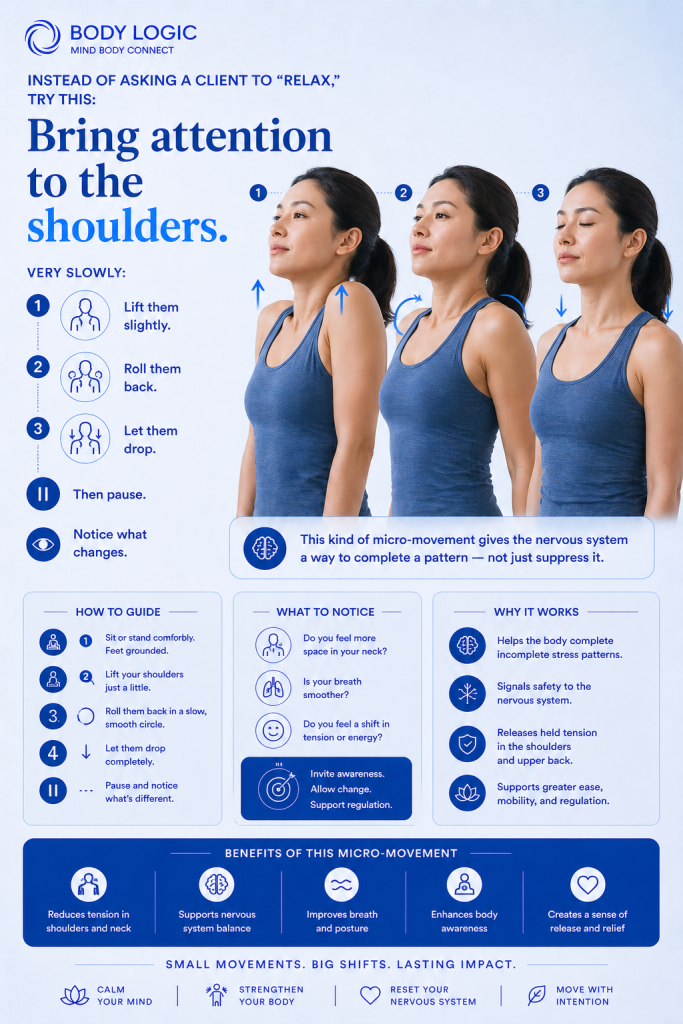
Instead of stretching aggressively, try making very small shoulder circles or gently rolling the head side to side with awareness.
Micro-movements help the nervous system feel safer because they are slow and non-threatening. They also improve body awareness and encourage tension to release gradually.
4. Body Scanning
A body scan involves slowly bringing awareness to different areas of the body without trying to change anything.
You might notice warmth, tension, heaviness, tingling, tightness, or relaxation.
The purpose is not to “fix” sensations but to improve interoception, which is the ability to sense what is happening inside the body.
Awareness itself can help the nervous system shift out of automatic stress patterns.
5. Gentle Rhythmic Movement
Slow walking, swaying, rocking, or flowing movements can help regulate the nervous system by introducing rhythm and predictability.
This is one reason practices such as Qi Gong, Tai Chi, yoga, and mindful movement are often calming for people experiencing stress.
The body responds well to slow, repetitive movement patterns that reinforce safety and regulation.
Consistency Matters More Than Intensity
One of the biggest misconceptions about stress relief is that the body needs extreme interventions to change.
In reality, the nervous system often responds best to small, repeated experiences of safety and regulation.
Practising somatic exercises consistently can help train the body to shift out of chronic stress patterns more easily over time.
Even five to ten minutes a day can make a meaningful difference when practised regularly.
The key is not perfection. It is repetition, awareness, and gentle nervous system support.
Relearning Safety Through the Body
Many people are highly mentally active but disconnected from their physical experience. Somatic exercises help rebuild that connection.
By slowing down and paying attention to movement, breathing, posture, and sensation, the body begins to recognise that it does not always need to stay in a protective state.
Over time, this can improve emotional regulation, relaxation, body awareness, and overall wellbeing.
Stress relief is not always about escaping stress completely. Often, it is about helping the body develop a greater capacity to recover from it.
Learn More About Somatic Practice
At bodylogic.online, we explore somatic movement, nervous system regulation, mindfulness, and embodied healing practices designed to help people reconnect with their bodies in a safe and practical way.
If you’re interested in learning more about somatic exercises, nervous system healing, and body awareness, our courses and resources provide guided practices that combine movement, breathwork, mindfulness, and modern nervous system science.