
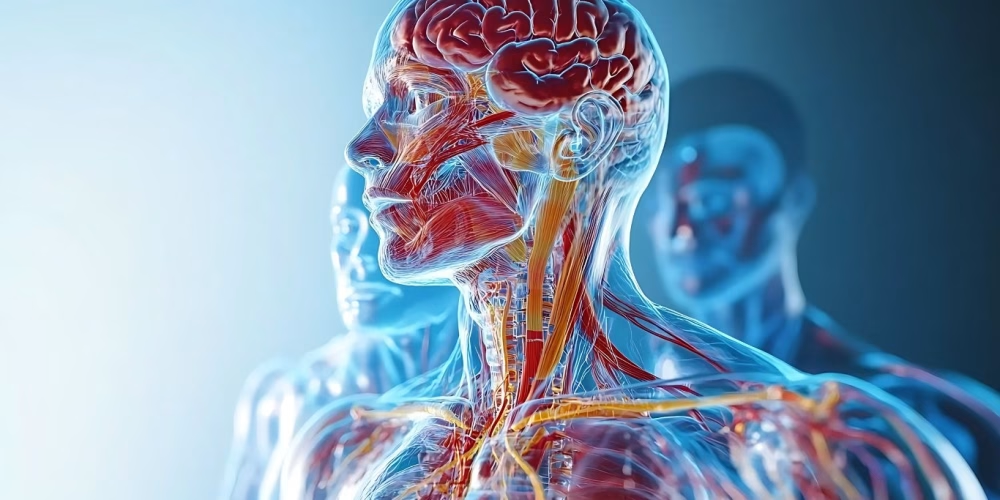
If you work in wellness, you’ve probably noticed that fascia and the lymphatic system are suddenly everywhere. Social feeds are full of reels promising emotional release through myofascial work or “detox” via lymphatic drainage.
But, while some of this content oversimplifies complex systems, the renewed attention isn’t accidental. It reflects a broader shift to understanding the body as an integrated, self-regulating system shaped by lived experience, not just anatomy.
Fascia as a sensory and regulatory network
Many practitioners now understand fascia as more than connective tissue. It’s a continuous, body-wide matrix that transmits force, supports movement efficiency and, crucially, communicates information to the nervous system.
Research shows fascia is densely innervated with mechanoreceptors and interoceptors, making it a key player in proprioception, pain perception and autonomic regulation.
Distributed throughout the body, fascia responds to loading, breath, movement and perceived safety, adapting its tone and hydration based on nervous system state.
Chronic stress, repetitive strain or unresolved threat responses can lead to densification and reduced glide within fascial layers, which are patterns often experienced as stiffness, restriction or “holding”.
Fascia, trauma and the nervous system
Trauma-informed practice doesn’t require us to claim that fascia “stores memories” in a literal sense.
What the evidence does support is that trauma alters autonomic function, posture, movement patterns and muscle tone over time. These changes inevitably affect fascial tension and organisation.
Because fascia is so closely linked to the autonomic nervous system, sustained sympathetic activation can create body-wide patterns of guarding and bracing. In somatic work, when we slow down, reduce load and invite interoceptive awareness, we’re often supporting a shift from protection to regulation.
This is why gentle myofascial and somatic approaches are central to nervous system retraining.
The lymphatic system: Flow, safety and recovery
The lymphatic system is another piece of the puzzle that’s gaining overdue attention. Lymphatic vessels run through fascial planes and rely on movement, breath and tissue elasticity to function effectively.
When fascia becomes rigid or dehydrated, researchers have found lymph flow can be compromised, contributing to inflammation, fatigue and slower recovery.
From a somatic perspective, practices that restore gentle movement, diaphragmatic breathing and tissue mobility don’t just support detoxification, they reinforce signals of safety. Research suggests manual lymphatic techniques can positively influence stress markers and mood, likely via parasympathetic activation.
Somatic release: Integration, not catharsis
Somatic release therapy is often misunderstood as emotional catharsis. In reality, its value lies in integration.
When fascial tissues receive slow, non-threatening input, mechanoreceptors send information to the brain that can support autonomic down-regulation.
Clients may experience spontaneous breaths, warmth, trembling or emotional softening – signs the nervous system is completing incomplete responses rather than “releasing stored trauma”.
Bringing it together
The current fascination with fascia and lymphatics reflects a growing recognition that healing is systemic. For wellness practitioners, this isn’t about chasing trends. It’s about deepening an already familiar understanding of embodiment, nervous system intelligence and the body’s innate capacity to self-regulate when given the right conditions.
Fascia provides the connective link between structure and sensation. The lymphatic system reflects flow and recovery. Somatic practice offers the context in which both can reorganise – gently, intelligently and in alignment with the nervous system.